
Humans live unsustainably through wasting, depleting, and degrading the earth’s natural capital. Scientific innovations may address many sustainability issues and create a more sustainable future. Historically, our materials broadly define our quality of life, from stone, bronze, iron, metal alloy, silicon, and plastics. Carbon materials, such as graphite, diamond, coal, and charcoal, have long been used in our society. Carbon black, activated carbon, and carbon fibers are critical materials in many applications. However, many of these carbon material production processes are energy extensive with significant greenhouse gas emissions.
Further, in the last twenty years, several carbon nanomaterials, such as carbon nanotubes, graphene, fullerenes, and mesoporous carbon structures, have been discovered to possess many fascinating properties that differ significantly from traditional carbon materials. For example, carbon nanotubes with cylindrical nanostructures have electrical conductivity more than 1,000 times greater than copper; graphene, a two-dimensional atomic-scale layer, is one of the strongest materials ever tested.
Our research motivation is to translate the superior properties of carbon materials into impactful applications with minimum environmental impacts that can create a sustainable future for humans. There are three key challenges in realizing this transition:
- New chemical processes are needed to produce carbon materials with reduced greenhouse gas emissions.
- Owing to the unique properties of carbon materials that depend on their nanoscale structures, it is necessary to synthesize carbon materials with controllable structures.
- Practical applications often require multifunctional solutions on a macro scale. Thus, it is essential to convert nanoscale properties of carbon materials into macroscale structures and incorporate necessary functionalities from other materials.
Our current research interests focus on developing functional carbon composite materials with well-defined nanoscale structures and suitable macroscale functionalities and utilizing these novel materials for sustainable energy and environmental applications.
The following are several of our ongoing research projects:
- Carbon materials (graphite, carbo onions, carbon black, and carbon nanotubes) from the thermocatalytic decomposition of methane for battery and water treatment applications
- Zinc-based energy storage devices (Zn air battery, Zn ion battery, Zn ion hybrid capacitor): Zinc anodes, oxygen electrocatalysts, novel cathode materials, and novel electrolytes
- Carbon composite electrocatalysts for electrochemical conversions: water splitting, hydrogen peroxide synthesis, carbon dioxide reduction, advanced oxidation for pollutant removal
- Carbon composite electrodes for supercapacitors and hybrid capacitors
- Nanocarbon for membranes and antibacterial materials
- Chirality selective synthesis of single-walled carbon nanotubes
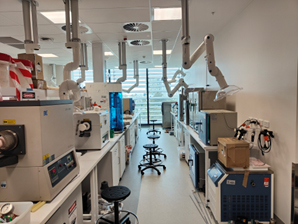
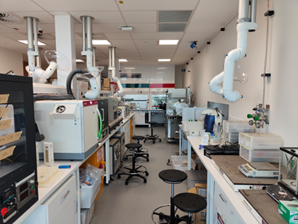
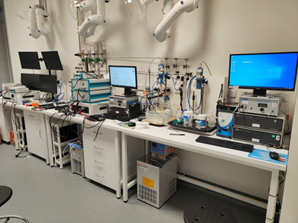
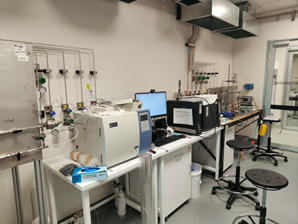
 Advanced Carbon Research Lab